

WA launches newborn screening for X-Linked Adrenoleukodystrophy
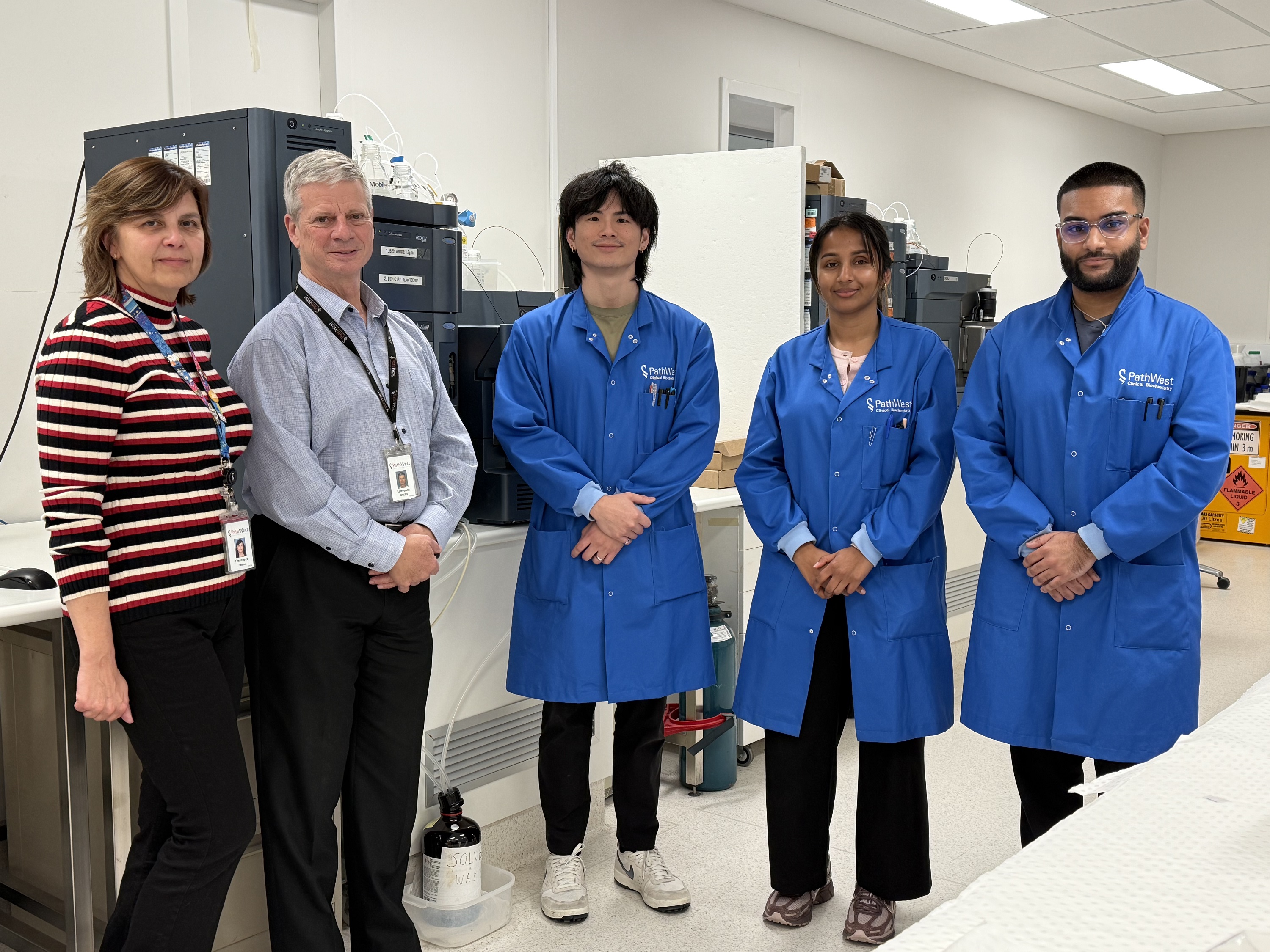 The specialist team of laboratory scientists contributing to the program expansion
14/08/2026
Western Australia has taken a significant step forward in the early detection of rare diseases, with newborn screening for X-linked Adrenoleukodystrophy (X-ALD) officially commencing on 3 August 2026.
Delivered through a collaboration between the Child and Adolescent Health Service (CAHS), Office of Population Health Genomics (OPHG), and PathWest, the new screening program will enable babies born in Western Australia to be tested for the rare genetic condition shortly after birth.
X-ALD is a rare genetic metabolic disorder that affects the nervous system and can cause progressive neuroregression and childhood dementia. Early identification is critical, as timely monitoring and treatment can significantly improve outcomes for affected children.
The screening program uses advanced technology to detect biochemical markers associated with X-ALD from newborn blood samples collected shortly after birth. Babies identified through the screening process then undergo clinical assessment and genetic testing, enabling early diagnosis and access to appropriate care and treatment pathways.
Perth Children’s Hospital (PCH) Consultant Paediatric Neurologist, Metabolic Consultant and Chair of WA Newborn Bloodspot Screening Committee Dr Maina Kava said the introduction of X-ALD screening represents an important step forward for newborn health services in Western Australia.
“By identifying affected babies at birth, we can intervene much earlier and provide families with access to specialist care before significant symptoms develop,” Dr Kava said.
The achievement follows more than two years of planning, development and implementation led by multidisciplinary teams across CAHS, PCH and PathWest.
Dr Kava acknowledged the dedication and expertise of PathWest colleagues who were instrumental in establishing the new screening capability.
"This milestone would not have been possible without the commitment and collaboration of our PathWest partners, who have worked tirelessly to bring this important program to life."
The addition of X-ALD screening further strengthens Western Australia’s newborn screening program, supporting earlier diagnosis of rare conditions and improving opportunities for timely treatment and ongoing care.
For families and clinicians alike, the launch represents a significant advancement in the early detection of rare diseases, ensuring Western Australian children have access to the best possible care from the very beginning of life.
Delivered through a collaboration between the Child and Adolescent Health Service (CAHS), Office of Population Health Genomics (OPHG), and PathWest, the new screening program will enable babies born in Western Australia to be tested for the rare genetic condition shortly after birth.
X-ALD is a rare genetic metabolic disorder that affects the nervous system and can cause progressive neuroregression and childhood dementia. Early identification is critical, as timely monitoring and treatment can significantly improve outcomes for affected children.
The screening program uses advanced technology to detect biochemical markers associated with X-ALD from newborn blood samples collected shortly after birth. Babies identified through the screening process then undergo clinical assessment and genetic testing, enabling early diagnosis and access to appropriate care and treatment pathways.
Perth Children’s Hospital (PCH) Consultant Paediatric Neurologist, Metabolic Consultant and Chair of WA Newborn Bloodspot Screening Committee Dr Maina Kava said the introduction of X-ALD screening represents an important step forward for newborn health services in Western Australia.
“By identifying affected babies at birth, we can intervene much earlier and provide families with access to specialist care before significant symptoms develop,” Dr Kava said.
The achievement follows more than two years of planning, development and implementation led by multidisciplinary teams across CAHS, PCH and PathWest.
Dr Kava acknowledged the dedication and expertise of PathWest colleagues who were instrumental in establishing the new screening capability.
"This milestone would not have been possible without the commitment and collaboration of our PathWest partners, who have worked tirelessly to bring this important program to life."
The addition of X-ALD screening further strengthens Western Australia’s newborn screening program, supporting earlier diagnosis of rare conditions and improving opportunities for timely treatment and ongoing care.
For families and clinicians alike, the launch represents a significant advancement in the early detection of rare diseases, ensuring Western Australian children have access to the best possible care from the very beginning of life.
Last Updated:
14/08/2026