
• Skip to main content
  • Skip to navigation
  • Accessibility
  • Contact Us
Government of Western Australia Crest
Government of Western Australia
Government of Western Australia Crest

Additional Menu

  • Accessibility
  • Contact us
Go to WA Government search
  • About us
    • About CAHS
    • Health Service Board
      • Frequently asked questions
    • Executive team
    • Our performance
    • Annual Reports
    • Strategies and plans
    • Acknowledgement of Country
    • Conduct standards
      • Public Interest Disclosure
      • Reporting misconduct
    • Annual Excellence Awards
    • Contact us
  • Our services
    • Neonatology
      • Neonatal Units
      • For parents and carers
      • Newborn Emergency Transport Service
      • The Perron Rotary Express Milk (PREM) Bank
      • Neonatal Follow up Program
      • Neonatology Clinical Research
      • Neonatology clinical guidelines
      • NETS WA clinical guidelines
      • Compliments and complaints
      • Neonatology Resources
      • Contact us
    • Community Health
      • Aboriginal Health Team
      • Child Health
      • Child Development Service
      • Immunisation
      • Refugee Health
      • School Health
      • Healthy Lifestyle Program
      • Bedwetting program
      • Compliments and complaints
      • Contact us
    • Mental Health
      • About us
      • Get help
      • Your healthcare rights
      • CAMHS Crisis Connect
      • Community CAMHS
      • Specialist services and day programs
      • Hospital services
      • Aboriginal Mental Health
      • For families and young people
      • Compliments and complaints
      • Contact us
    • Perth Children's Hospital
    • Children's Hospice Project
    • Community Hubs
    • First 1,000 Days Framework
  • For families and carers
    • COVID-19
      • Visiting CAHS sites
      • COVID-19 and children
      • Vaccination
      • Resources
    • Accessing or updating medical records
    • Being involved in your child's care
      • Your healthcare rights
      • Your child's medical record
      • Informed consent
      • Shared decision making
    • Consumer engagement
      • Become a consumer representative
      • Community Ambassador Program
      • Consumer groups and committees
      • Consumer Engagement Strategy
    • Compliments and complaints
      • Feedback form
      • You Said, We Did
      • Stars of CAHS Awards
    • Safety and quality of care
      • Preventing infections
      • Patient safety
      • Protecting the vulnerable
      • Listening and communicating with our consumers
    • QRious Health Hub for young people
    • Resources
    • Telehealth
  • For health professionals
    • Work with us
      • Careers at CAHS
      • Our vacancies
      • Why work for us?
    • Resources
      • Community Health Clinical Nursing Manual
      • CAHS Clinical Disclaimer
      • Neonatology guidelines
      • Neonatology Postnatal Ward guidelines
      • Newborn Emergency Transport Service WA guidelines
      • Schools and Child Care
    • CAHS Medical Library
    • CAHS Child Safeguarding Unit
    • Referrals to our services
      • Community Health
      • Mental Health
      • Newborn Emergency Transport Service
  • Research
    • For families
    • For researchers
      • Ethics and governance
      • Support and development
      • Research Education Program
      • Events
      • Resources
    • Explore our research
      • ACORN project
      • Early Moves
      • FH in Kids
      • Food Allergy Clinical Research Program
      • Healthy Lifestyle Program
      • Move to Improve
      • Safer Care for Children in Hospital research program
      • Research by department
    • For industry and sponsors: clinical trials
  1. Home
  2. News
  3. 2026
  4. 08
  5. 17
  6. Almost 20 babies treated for serious sunburn at PCH each year

Almost 20 babies treated for serious sunburn at PCH each year
Almost 20 babies treated for serious sunburn at PCH each year

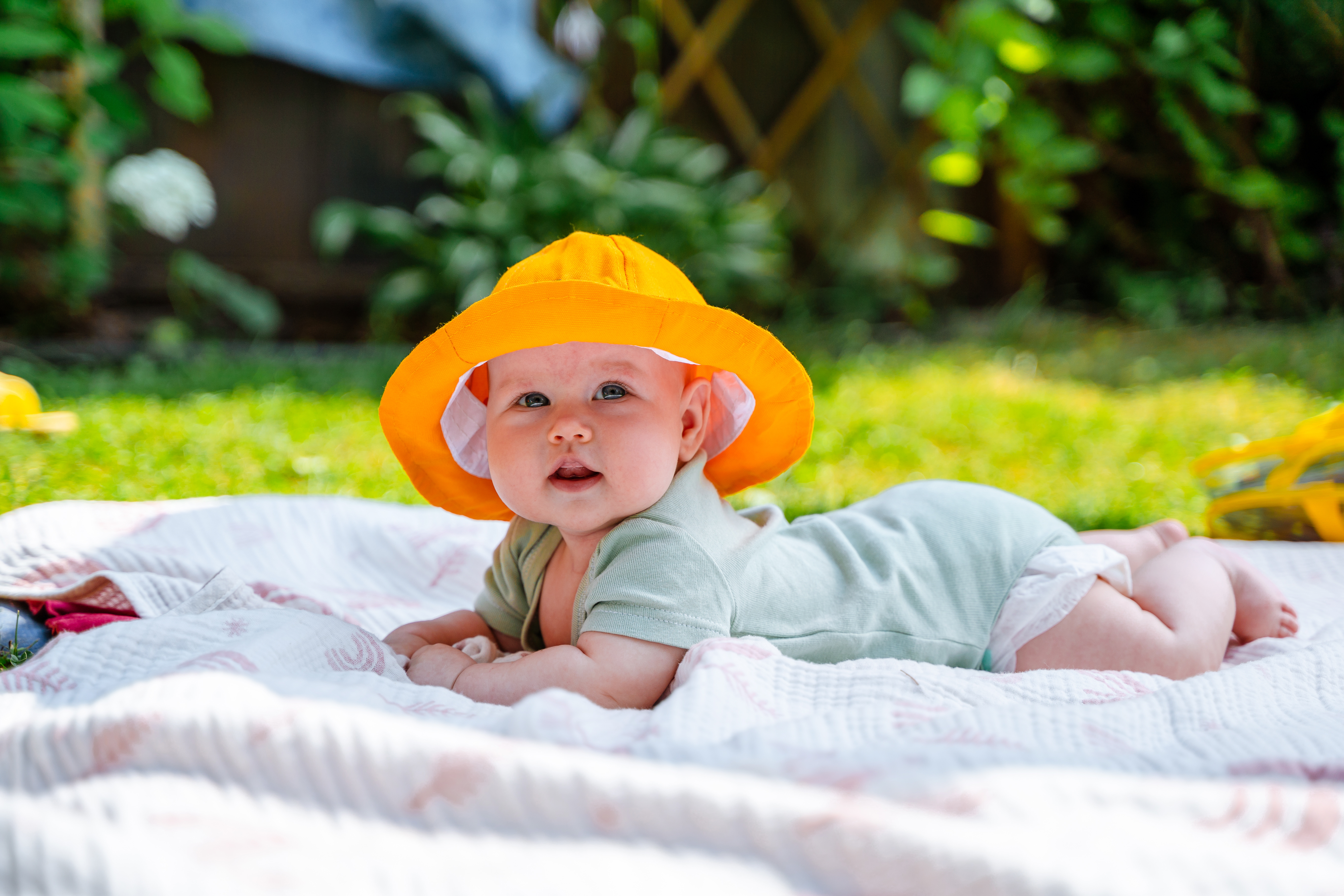
Baby in the sun with a hat on Parents warned to protect fragile infant skin from the sun
28/10/2025

Perth Children's Hospital (PCH) is reminding families that babies can suffer serious sunburn even when they are sitting in the shade, as clinicians continue to see infants requiring treatment for preventable UV-related injuries.

Each year, almost 20 babies present to PCH with serious sunburn, highlighting the importance of sun safety for young children, particularly during the warmer months.

One of those children was 10-week-old Lucy, who required hospital treatment after sustaining second-degree burns while outside on an overcast day.

Lucy’s mother, Courtney Goddard, said the experience was confronting for the whole family.

"They removed the top layers of the skin, which is where the blisters and the boils were sitting. So they had to remove all of those and hearing your baby scream through ED. Screams you're not gonna forget," Ms Goddard said.

Lucy had been outside in the shade when she was exposed to what is known as reflective ultraviolet (UV) radiation.

While shade helps reduce direct sun exposure, UV rays can still be reflected from surrounding surfaces and cause significant skin damage.

PCH Clinical Nurse Consultant Tania McWilliams said many families were unaware of the risks posed by reflective UV.

"It's reflecting off the surrounding environment, so the grass, the trees, just because they're in the shade doesn't mean they're necessarily safe," said Tania.

Babies under 6 months of age are particularly vulnerable to sun damage because their skin is highly sensitive.

Sunscreen is generally not recommended for this age group, making protective clothing, shade and careful planning essential.

Clinicians are encouraging families to check daily UV levels and avoid outdoor activities during periods of high UV exposure where possible.

Ms Goddard said her family's experience highlighted an important lesson about the difference between weather conditions and UV radiation levels.

"The weather doesn't mean anything to the UV levels is something we've learned the hard way. The day that she got burnt it was raining and the UV was 9," she said.

Exposure to UV radiation during childhood can have long-term health consequences.

Research shows that excessive UV exposure during childhood and adolescence significantly increases the risk of developing skin cancer later in life.

As temperatures begin to rise across Western Australia, PCH is encouraging parents and carers to remain vigilant and take steps to protect babies and young children from harmful UV exposure.

Simple measures such as checking the UV index, seeking shade, dressing children in loose-fitting protective clothing and planning outdoor activities for early morning or late afternoon can help reduce the risk of serious sunburn.

While Lucy is expected to make a good recovery, her story is an important reminder that even on cloudy, mild or shaded days, UV radiation can still cause significant harm to young skin.

Channel 7 reports on the importance of UV safety for babies:

Previous Next
Last Updated: 17/08/2026
  • Facebook
  • Instagram
  • YouTube

Footer menu

  • wa.gov.au
  • Copyright
  • Disclaimer
  • Privacy
  • Sitemap
  • Contact Us

Brought to you by the Department of Health, Western Australia

© Government of Western Australia 2018 to