
• Skip to main content
  • Skip to navigation
  • Accessibility
  • Contact Us
Government of Western Australia Crest
Government of Western Australia
Government of Western Australia Crest

Additional Menu

  • Accessibility
  • Contact us
Go to WA Government search
  • About us
    • About CAHS
    • Health Service Board
      • Frequently asked questions
    • Executive team
    • Our performance
    • Annual Reports
    • Strategies and plans
    • Acknowledgement of Country
    • Conduct standards
      • Public Interest Disclosure
      • Reporting misconduct
    • Annual Excellence Awards
    • Contact us
  • Our services
    • Neonatology
      • Neonatal Units
      • For parents and carers
      • Newborn Emergency Transport Service
      • The Perron Rotary Express Milk (PREM) Bank
      • Neonatal Follow up Program
      • Neonatology Clinical Research
      • Neonatology clinical guidelines
      • NETS WA clinical guidelines
      • Compliments and complaints
      • Neonatology Resources
      • Contact us
    • Community Health
      • Aboriginal Health Team
      • Child Health
      • Child Development Service
      • Immunisation
      • Refugee Health
      • School Health
      • Healthy Lifestyle Program
      • Bedwetting program
      • Compliments and complaints
      • Contact us
    • Mental Health
      • About us
      • Get help
      • Your healthcare rights
      • CAMHS Crisis Connect
      • Community CAMHS
      • Specialist services and day programs
      • Hospital services
      • Aboriginal Mental Health
      • For families and young people
      • Compliments and complaints
      • Contact us
    • Perth Children's Hospital
    • Children's Hospice Project
    • Community Hubs
    • First 1,000 Days Framework
  • For families and carers
    • COVID-19
      • Visiting CAHS sites
      • COVID-19 and children
      • Vaccination
      • Resources
    • Accessing or updating medical records
    • Being involved in your child's care
      • Your healthcare rights
      • Your child's medical record
      • Informed consent
      • Shared decision making
    • Consumer engagement
      • Become a consumer representative
      • Community Ambassador Program
      • Consumer groups and committees
      • Consumer Engagement Strategy
    • Compliments and complaints
      • Feedback form
      • You Said, We Did
      • Stars of CAHS Awards
    • Safety and quality of care
      • Preventing infections
      • Patient safety
      • Protecting the vulnerable
      • Listening and communicating with our consumers
    • QRious Health Hub for young people
    • Resources
    • Telehealth
  • For health professionals
    • Work with us
      • Careers at CAHS
      • Our vacancies
      • Why work for us?
    • Resources
      • Community Health Clinical Nursing Manual
      • Aboriginal child health resources
      • CAHS Clinical Disclaimer
      • Neonatology guidelines
      • Neonatology Postnatal Ward guidelines
      • Newborn Emergency Transport Service WA guidelines
      • Schools and Child Care
    • CAHS Medical Library
    • CAHS Child Safeguarding Unit
    • Referrals to our services
      • Community Health
      • Mental Health
      • Newborn Emergency Transport Service
  • Research
    • For families
    • For researchers
      • Ethics and governance
      • Support and development
      • Research Education Program
      • Events
      • Resources
    • Explore our research
      • ACORN project
      • Early Moves
      • FH in Kids
      • Food Allergy Clinical Research Program
      • Healthy Lifestyle Program
      • Move to Improve
      • Safer Care for Children in Hospital research program
      • Research by department
    • For industry and sponsors: clinical trials
  1. Home
  2. News
  3. 2026
  4. 02
  5. 11
  6. Pair helping girls picture futures in science

Pair helping girls picture futures in science
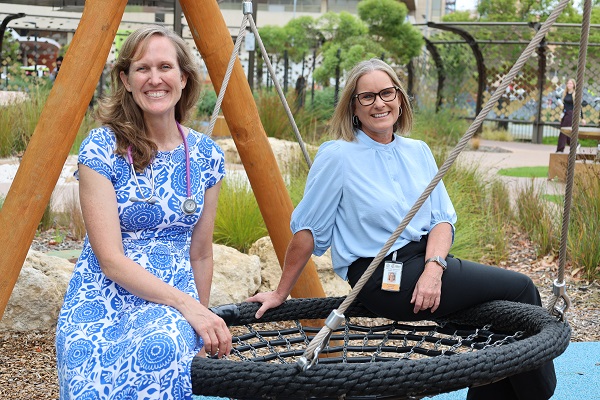
To mark the International Day of Women and Girls in Science, we are shining a spotlight on two leaders who are breaking down barriers and encouraging the next generation.

Pair helping girls picture futures in science

Professor Asha Bowen OAM and Dr Kate Stannage Role models for girls in science Asha, left, and Kate.
11/02/2026

Across the Child and Adolescent Health Service, women in scientific roles are doing more than just improving the health and wellbeing of WA children and young people.

As role models, mentors and leaders, they are also breaking down barriers and encouraging younger generations of women and girls to consider careers in Science, Technology, Engineering and Maths (STEM).

This International Day of Women and Girls in Science we shine a spotlight on two such staff members.

Infectious Diseases Specialist at Perth Children’s Hospital, Professor Asha Bowen OAM, believes the idea that science is for men, persists even today.

‘In a lot of people’s minds, a scientist is still a man in a lab coat’,’ she says.

But she hopes she is playing a role in changing that perception.

Away from the workplace, Asha dedicates some of her spare time to visiting schools and taking part in university girls-in-science days to help students view STEM as an option for all.

Since 2018, she has been delivering talks and workshops at the primary school her children once attended, sharing her passion for science with an estimated 400 year-6 girls as they have prepared to enter high school.

Last year, she returned to her own high school in Sydney where – alongside other female alumni succeeding in STEM – she shared her journey to becoming a professor. After presenting to around 300 girls in Years 7–9, Asha also ran workshops that included fun lessons on taking ‘tonsil selfies’.

‘I used the exercise to show how we developed a method to better understand Strep throat and prevent rheumatic fever,’ she says.

‘Sharing our stories is a powerful way to show girls that they too can aspire to careers in science.’

Consultant orthopaedic surgeon Dr Kate Stannage is another helping to drive change. In 2008, she became the third female orthopaedic surgeon in WA. Today she is one of just 5, but that has not stopped her becoming a strong voice for women in surgery.

In 2018 Kate received an Excellence in Women’s Leadership award for her efforts to see women given equitable access to higher levels of leadership.

More recently she made key contributions to the Australian Orthopaedic Association’s first Pregnancy in Orthopaedics Guidelines, designed to improve work safety for expectant surgeons.
The guidelines were in response to a 2024 study which found orthopaedic surgeons had significantly higher rates of miscarriage and pregnancy complications than the general population, and 3 times the rate of infertility.

The study also highlighted potential workplace risks to the women’s unborn babies, including long hours and exposure to bone cement, diathermy smoke and formaldehyde from cadavers and anatomical laboratories.

‘Given that 25 per cent or trainees nationally are now women – and of child-bearing age – it was vital we took action to protect their welfare,’ Kate says.

‘We also know that around a quarter of female orthopaedic surgeons have at least one baby during their training, so these guidelines will protect their offspring too.’

‘If we want to encourage more women into our profession, we need to provide them safe and supportive work environments.’

With the pregnancy guidelines in place, Kate is now focused on:

  • producing evidence-based radiation safety guidelines for female orthopaedic surgeons who are at higher risk of breast cancer than the general population
  • developing a framework and policy for orthopaedic surgeons returning to work after an interruption to training
  • improve orthopaedic surgical training for all by investigating ‘confidence vs competence’ and defining gender-bias in workplace-based assessments; and
  • chairing the Australian Orthopaedic Association’s Orthopaedic Women’s Link which offers support to women through their orthopaedic careers.

Previous Next
Last Updated: 11/02/2026
  • Facebook
  • Instagram
  • YouTube

Footer menu

  • wa.gov.au
  • Copyright
  • Disclaimer
  • Privacy
  • Sitemap
  • Contact Us

Brought to you by the Department of Health, Western Australia

© Government of Western Australia 2018 to